01 / RESTORATION
Relearning An Abandoned Orchard
When Gene and Eileen arrived, the orchard already had a history.
But much of the practical knowledge needed to operate it had been lost.
Gene describes locating old irrigation lines, understanding the wells and filtration system, and gradually rebuilding knowledge of how the property functioned.
Restoration therefore meant recovering two things at once:
the orchard itself and the knowledge required to manage it.
KEY INSIGHT
Agricultural restoration is not always about starting again.
Sometimes it begins by learning how to read what is already there.
02 / MATERIALS
Almost Everything But The Leaves
Gene began asking how much of the orchard could be used rather than discarded.
Pecans became food products.
Pruned limbs became cutting boards, ornaments, furniture, firewood, and mulch.
His goal, as he described it, was to find a use for almost everything the orchard produced except the leaves.
The farm’s current product range continues to reflect that approach, extending from pecans and baked goods to products made from pecan wood.
KEY INSIGHT
For Yegua Creek, diversification begins not by asking what else the farm could grow, but what more could be done with what it already has.
03 / MARKETS
The One Bag Of Mulch
One of Gene’s early market experiences did not go as planned.
At a plant-sale event, he arrived with a trailer of bagged mulch, expecting gardeners to buy it.
He sold one bag.
Nearby, Eileen was shelling pecans—and customers were buying them.
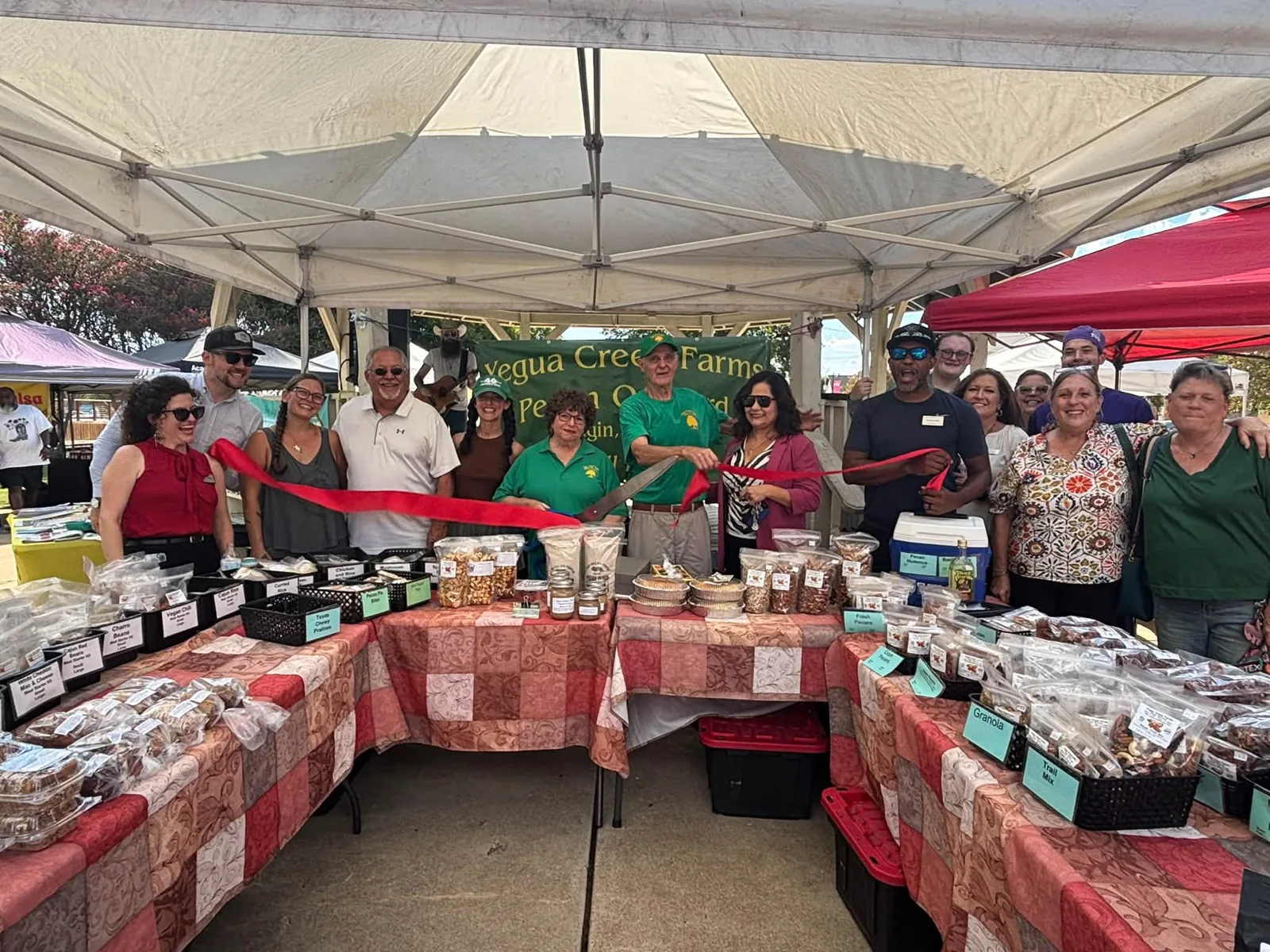
The experience helped redirect the business toward pecans and farmers markets, while mulch and firewood became secondary products.
Later, when a bread vendor left one of the markets, Gene saw another opening and began baking.
Customer recipes and feedback continued to influence what came next.
KEY INSIGHT
Sometimes a business plan changes because the market gives a clearer answer than the farmer expected.
04 / VALUE-ADDED PRODUCTION
From Orchard To Kitchen
Yegua Creek no longer operates only as a pecan orchard.
Its commercial kitchen extends the life of what the farm produces into breads, baked goods, pecan-based products, preserves, and meal starters.
Gene also describes introducing products such as pecan flour and pecan butter, while the current farm store includes a much broader range of shelf-stable and prepared products.
The shift changes the question from:
How many pecans can the orchard produce?
to:
How many different forms of value can one crop create?
RESEARCH QUESTION
Can a small farm become more resilient by creating more value from what it already produces rather than simply producing more?
05 / EXPERIMENTATION
An Incubator Of Ideas
Gene describes experimenting with pecans far beyond their most familiar uses.
The conversation includes trials and collaborations involving pecan flour, drinks, baked goods, sauces, and other products.
Not every idea worked.
Some potential partners faced production constraints. Other collaborations did not develop as expected.
Gene does not describe those attempts simply as failures.
He sees the farm as a place where ideas can be tested, shared, and sometimes developed into opportunities for other people.
He describes his role as an “incubator of ideas.”
KEY INSIGHT
Diversification is not only about adding products.
It can also mean creating space for experimentation—and accepting that not every experiment needs to succeed.